
Benefits of Sustainable Home Renovation Materials
Table of Contents
- How Sustainable Home Renovation Materials Cut Energy Costs
- Eco-Friendly Renovation Ideas That Improve Indoor Air Quality
- Cost-Effective Sustainable Building Materials for Long-Term Savings
- Sustainable Home Renovation Grants and Tax Incentives
- How Green Materials Increase Resale Value
- Reducing Carbon Footprint Through Material Sourcing
- Waste Reduction and the Circular Economy in Renovation
- Frequently Asked Questions
Last Updated: September 21, 2026
How Sustainable Home Renovation Materials Cut Energy Costs
Sustainable home renovation materials are building products chosen for lower environmental impact, and they often cut energy costs at the same time. Better insulation, high-performance windows, and a tighter building envelope keep heated air inside during a Canadian winter instead of letting it escape.
Insulation, Windows, and the Building Envelope
The building envelope is the barrier between your indoor space and the outdoors: walls, roof, windows, doors, and foundation. Every gap in it is money leaving the house.
Two upgrades matter most:
- Recycled cellulose insulation. Made from roughly 85% recycled paper content, it fills wall cavities completely and dampens sound. The catch: it can settle over time if it isn’t installed correctly, so the installer matters as much as the product.
- Energy Star windows. Double or triple-pane glazing with Low-E coatings and gas-filled spaces reduces heat loss. A poorly installed window wipes out the benefit, so this is not a DIY job.
Pair either with a smart thermostat and you stop heating an empty house. Energy consumption drops because the system runs less, not because you’re uncomfortable.
Eco-Friendly Renovation Ideas That Improve Indoor Air Quality
Eco-friendly renovation ideas that improve indoor air quality focus on what off-gasses inside your home. Paints, finishes, adhesives, and flooring release volatile organic compounds, and those compounds linger long after the smell fades.
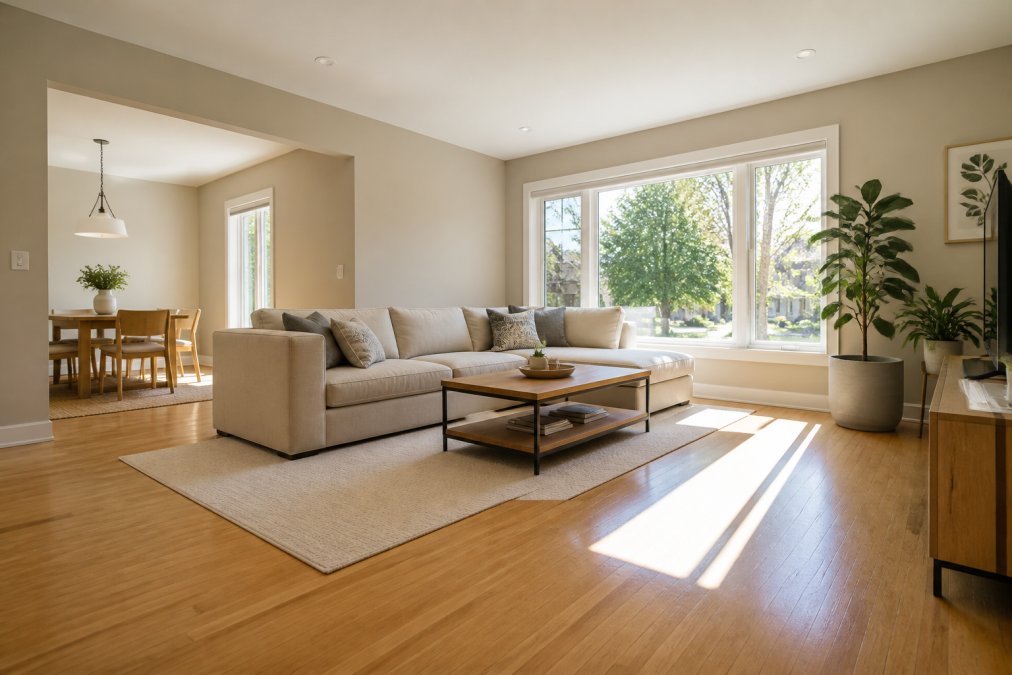
Low-VOC Paints and Non-Toxic Finishes
Low-VOC paints are interior and exterior coatings formulated to release minimal chemical vapor as they cure. They dry quickly, come in the same color range as standard paint, and hold up on high-traffic walls.
What most guides miss is the whole finishing schedule. Paint is one coat of the problem. Adhesives, caulking, and floor sealers matter just as much. If you’re choosing low-VOC paint and then sealing the floor with a solvent-based product, you’ve solved a third of the issue.
Bamboo flooring is another strong pick here. It’s harvested in 5-7 years, emits low VOCs, and handles high-traffic areas well. Quality varies a lot between manufacturers, so check the certification before you buy.
Cost-Effective Sustainable Building Materials for Long-Term Savings
Cost-effective sustainable building materials are the ones that cost more upfront and less over the life of the home. That’s the honest framing. Cellulose insulation and bamboo flooring generally run cheaper than their conventional equivalents, while recycled glass countertops and hempcrete carry a premium.
Durability, Maintenance, and Repairability
Durability is where green materials quietly win. Reclaimed wood has already survived decades, which is why it’s so stable. Recycled glass countertops are non-porous, stain-resistant, and need almost no maintenance. Bamboo resists scratches better than many hardwoods.
| Material | Best For | Watch Out For |
|---|---|---|
| Recycled cellulose insulation | Attics and wall cavities | Settling if poorly installed |
| Bamboo flooring | High-traffic interior areas | Inconsistent quality by brand |
| Recycled glass countertops | Kitchens and bathrooms | Highest upfront cost |
| Reclaimed wood | Accents and cabinetry | Limited supply of some species |
| Low-VOC paint | Every painted surface | Slightly higher than standard paint |
Ask your contractor for the maintenance schedule before you sign, not after. Knowing that a countertop needs resealing every few years changes whether it’s actually the cheaper option.
Sustainable Home Renovation Grants and Tax Incentives
Sustainable home renovation grants and incentives change the math on energy upgrades, but the programs and amounts shift with every federal budget and provincial cycle. Rather than quote a figure that may already be outdated, the practical move is to understand the categories of support, then verify current terms directly before you budget.
The Categories of Support
Most support falls into four buckets:
- Federal retrofit programs. Natural Resources Canada administers energy efficiency initiatives that typically require a pre-retrofit assessment, a post-retrofit assessment, and documented receipts. The assessment-before-work rule is the one that disqualifies the most applicants.
- Provincial and territorial programs. These vary widely. Some provinces run their own rebate streams for insulation, windows, and heat pumps; others layer on top of federal programs. Eligibility often depends on the age and type of the home.
- Municipal and utility incentives. Local utilities frequently offer rebates for specific equipment swaps, and some municipalities provide property tax relief for verified energy improvements.
- Tax credits and deductions. The Canada Revenue Agency publishes guidance on what qualifies at tax time. Some credits apply to the cost of materials and labor; others apply only to specific equipment.
Certification Pathways That Unlock Value
Beyond direct rebates, green building certifications can function as an incentive in themselves. Programs like LEED and Passive House set performance thresholds for energy, materials, and indoor environmental quality. Meeting them often makes a project eligible for additional incentive streams and, separately, supports the resale case covered above.
The Sequencing Mistake That Costs Money
The most common error is buying materials first and checking eligibility second. Many programs require an assessment before work begins, and starting early can disqualify you. The correct order is:
- Confirm which programs you may qualify for.
- Book any required pre-work assessment.
- Get written confirmation of eligibility where the program allows it.
- Then schedule the work and keep every receipt.
Program terms, caps, and eligibility windows change frequently. Confirm current rules directly with the administering body before committing to a scope of work, and keep documentation for every stage, applications are frequently rejected for missing paperwork rather than ineligible work.
Two places to start:
- Natural Resources Canada energy efficiency programs lists federal retrofit and efficiency initiatives.
- Canada Revenue Agency guidance on renovation tax credits covers what qualifies at tax time.
How Green Materials Increase Resale Value
Green materials increase resale value because buyers price operating costs into their offers. A home with a documented energy upgrade history reads as lower-risk than one with an unknown furnace and single-pane windows, and that risk discount shows up in negotiation, not just in the listing price.
What Actually Moves the Number
Four categories tend to carry measurable weight at resale:
- Building envelope upgrades. Added insulation, air sealing, and high-performance windows reduce the energy load a buyer is inheriting. A home that costs less to heat is worth more to a buyer who has been watching utility bills climb.
- Heating and cooling systems. A high-efficiency heat pump or furnace with a documented install date and service record removes a major unknown from the buyer’s inspection list.
- Durable, low-maintenance finishes. Solid bamboo, reclaimed wood, and recycled glass surfaces age well and photograph well. Buyers read them as maintained rather than patched.
- Documented certification. A home that has been through a recognized green building certification carries third-party verification, which is harder to dispute than a seller’s claim.
The Paperwork That Turns a Renovation Into a Selling Point
What most sellers get wrong is the file. A high-efficiency window upgrade with no receipts is just a window. Keep:
- Invoices showing product make, model, and installation date.
- Product specification sheets, including insulation R-values and window U-factors.
- Any energy assessment reports, before and after.
- Warranty documents and maintenance records.
Certification as a Resale Signal
Photograph the open walls before drywall goes up. Insulation, air sealing, and framing are invisible after the fact, and those photos are the only proof a future buyer will see.
Reclaimed wood and recycled glass surfaces also carry an aesthetic premium. They photograph well, they are hard to replicate, and they signal a home that has been maintained rather than patched. That premium is real but secondary, the energy and system documentation is what moves the appraisal.
Reducing Carbon Footprint Through Material Sourcing
Reducing carbon footprint through material sourcing comes down to distance and origin. A locally milled timber product travels a fraction of the distance of an imported alternative, and transportation is a large share of a material’s total environmental impact.
- Where was this made?
- How far did it travel?
- What happens to it at end of life?
Don’t assume “natural” means low-impact. A material shipped across an ocean can carry a higher carbon footprint than a locally produced conventional option. Ask where it came from before you assume it’s the greener choice.
Waste Reduction and the Circular Economy in Renovation
Waste reduction and the circular economy in renovation mean designing so materials get reused instead of landfilled. Renovation is traditionally a wasteful process: demolition, disposal, repeat.
The most sustainable material is the one you don’t have to replace. Durability, repairability, and local sourcing do more for your carbon footprint and your budget than any single green product.
Frequently Asked Questions
What are the primary benefits of using sustainable materials in home renovations?
Sustainable home renovation materials offer several key advantages: lower energy consumption through better thermal performance, improved indoor air quality from non-toxic finishes like low-VOC paints, and reduced carbon footprint. They also tend to be more durable, which lowers long-term maintenance costs. Many options, such as recycled steel and reclaimed wood, divert waste from landfills and support a circular economy.
Do sustainable renovation materials increase home resale value?
Yes, they can. Features like energy-efficient windows, high R-value insulation, and durable bamboo flooring are attractive to buyers. A home with lower utility bills and healthier indoor air quality often stands out in the market. While you may not recoup the full upfront cost, the combination of long-term savings and buyer appeal makes sustainable upgrades a smart investment for resale.
Are sustainable building materials more cost-effective in the long run?
Often, yes. While some eco-friendly materials have a higher upfront price, they can be more cost-effective over time. For example, recycled cellulose insulation reduces energy bills, and durable materials like recycled glass countertops resist stains and heat, lowering replacement costs. Factoring in maintenance savings, energy efficiency, and available grants, the total cost of ownership is frequently lower.
What role do sustainable materials play in reducing a home’s carbon footprint?
Sustainable materials reduce a home’s carbon footprint in two main ways: by sequestering carbon (e.g., hempcrete, engineered mass timber) and by lowering operational energy use through better insulation and windows. Choosing local materials also cuts emissions from shipping. Together, these choices shrink the greenhouse gas emissions associated with your renovation and the home’s ongoing energy consumption.
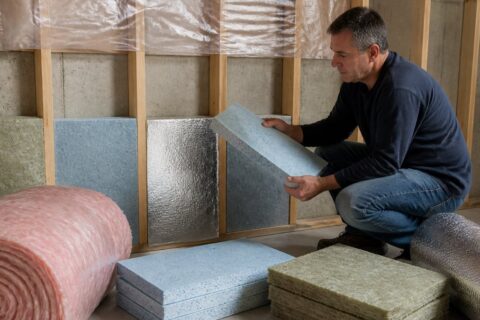
Table of Contents
Diagnose Your Basement Moisture Before InsulatingIdentifying water intrusion sourcesMeasuring moisture levelsBest Insulation for…
Table of Contents
1. Optimize Your Small Kitchen Layout Ideas for Better FlowGalley Layouts for Narrow SpacesL-Shaped ConfigurationsSingle-Wall…