
Best Veneto Homes Alternatives in St. Albert
Table of Contents
- Top Veneto Homes Alternatives for Custom Home Building
- Sarasota Homes: Personalized Design and Budget Flexibility
- Danson Custom Homes: Luxury Acreage Specialists
- Richlyn Custom Homes: Hands-On Craftsmanship and Quality
- UrbanAge Homes: High-Performance and Durability
- How to Build a Custom Home Without an Architect
- Choosing a Custom Home Builder Checklist
- New Home Warranty Requirements in Alberta
- Frequently Asked Questions
Last Updated: September 1, 2026
Top Veneto Homes Alternatives for Custom Home Building
If you’re considering a custom home build in St. Albert, you’re weighing your options carefully. While Veneto Homes has established itself in the market, several other builders offer distinct advantages in design flexibility, luxury specifications, craftsmanship, and client relationships.
At Mario Laflamme Contracting & Renovation Ltd, we’ve worked with homeowners exploring multiple Veneto Homes alternatives and seen firsthand how the right builder transforms a construction project from stressful to rewarding. The builders featured here represent some of the strongest options available for custom home construction in the region.
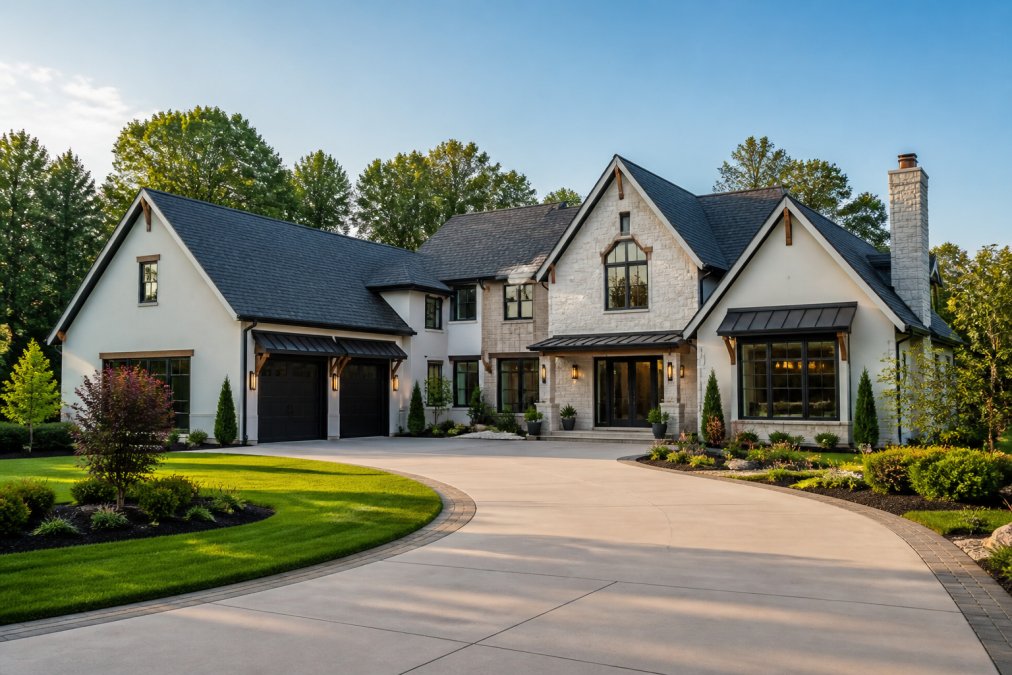
This guide walks you through five proven Veneto Homes alternatives, explains what sets them apart, and provides a framework for choosing the right builder for your needs. Each brings a different philosophy to custom home building, and that difference matters when you’re investing in one of the largest purchases of your life.
The strongest differentiator between builders isn’t always price, it’s the clarity of their process and how proactively they communicate during construction. Builders who document every phase and anticipate client questions tend to deliver fewer surprises and higher satisfaction.
Sarasota Homes: Personalized Design and Budget Flexibility
Sarasota Homes stands out for its philosophy that every custom home should reflect the lifestyle and personality of the people living in it. Rather than imposing a single design aesthetic, they work with clients to integrate their vision, preferences, and budget constraints into the final product.
What makes this approach valuable is the flexibility it provides. Many custom builders push clients toward premium finishes and high-end materials as standard practice. Sarasota Homes accommodates various budget levels without compromising quality.
You’re not forced to choose between your design vision and your financial reality. The team guides clients through the building process, helping them understand trade-offs and make informed decisions about where to invest premium resources and where to optimize costs.
The builder’s reputation centers on the strength of their client relationships. Past clients consistently mention the team’s willingness to listen, adjust plans mid-project, and explain recommendations. This hands-on guidance is particularly valuable for first-time custom home builders. For homeowners prioritizing personalization and wanting a builder who adapts to their specific situation rather than forcing them into a predetermined package, Sarasota Homes delivers strong value.
Danson Custom Homes: Luxury Acreage Specialists
Danson Custom Homes has carved out a distinct niche: luxury acreage homes. If you’re building on a substantial property with estate-home aspirations, this builder brings specialized expertise that general custom builders often lack.
The defining characteristic of Danson’s approach is their documented process. They’ve systematized luxury acreage construction from site selection through final finishes in a way that removes ambiguity. This structured methodology appeals to clients who want certainty about timeline and progress. This transparency is especially important for high-value projects where surprises carry significant financial weight.
Danson’s team is known for proactive communication. Rather than waiting for clients to identify issues, the builder anticipates potential challenges and brings solutions to the table before problems emerge. This approach tends to result in fewer delays, fewer budget overruns, and fewer conflicts during construction.
The trade-off with Danson is price point. This builder’s specialty is high-end acreage homes, and that specialization comes at a premium cost. But if you’re building a substantial estate home and want a builder with deep experience in acreage development, documented processes, and proactive management, Danson’s expertise justifies the investment.
Richlyn Custom Homes: Hands-On Craftsmanship and Quality
Richlyn Custom Homes brings over ten years of experience in luxury custom home building, with a philosophy centered on quality, craftsmanship, and strong client relationships (bbb.org). What distinguishes this builder is the hands-on involvement of the owner in every project.
The owner comes from a construction background, not just a business or sales background. This matters. When unexpected challenges arise, the owner’s construction expertise becomes an asset. You’re not relying on a project manager relaying information from a distant architect or engineer, you’re working with someone who can evaluate options and recommend solutions based on actual building knowledge.
Richlyn’s approach emphasizes patience in the design and decision-making process. The team doesn’t rush clients through choices. Instead, they explain the implications of various options and support you in making decisions that align with your long-term satisfaction. This measured approach takes more time upfront but typically results in fewer regrets during and after construction.
The builder’s pricing range is broad, reflecting the wide spectrum of custom homes they construct. For homeowners who value technical expertise, hands-on ownership involvement, and a builder who prioritizes craftsmanship over speed, Richlyn represents a solid choice among Veneto Homes alternatives.
UrbanAge Homes: High-Performance and Durability
UrbanAge Homes takes a different approach to custom home building, one centered on durability, comfort, and high-performance construction. Rather than focusing exclusively on aesthetic luxury, this builder emphasizes how the home actually performs: temperature maintenance, material durability, and comfort.
This philosophy appeals to homeowners who view their custom home as a long-term investment in livability. High-performance construction means better insulation, superior HVAC systems, quality windows that resist air leakage, and materials selected for longevity. Over time, these choices compound into lower utility bills, fewer maintenance issues, and a home that ages gracefully.
UrbanAge is noted for creativity and flexibility in design. The team works with clients to create functional floor plans that genuinely suit how people live, paired with design choices that enhance both aesthetics and performance. This combination of practical durability and thoughtful design is relatively rare in the custom home market.
The builder’s reputation emphasizes attentiveness and responsiveness. Clients describe the UrbanAge team as genuinely engaged in understanding their needs and willing to explore creative solutions. This collaborative approach, combined with the focus on high-performance construction, makes UrbanAge particularly attractive for buyers who plan to stay in their custom home long-term.
The strongest Veneto Homes alternatives each excel in different dimensions: Sarasota in design flexibility, Danson in acreage expertise, Richlyn in hands-on craftsmanship, and UrbanAge in durability and performance. Your choice depends on which dimensions matter most to your specific situation.
How to Build a Custom Home Without an Architect
Many homeowners assume that custom home building requires hiring an architect, but it’s not always necessary. Understanding when you need an architect and when a skilled custom builder can handle design and planning is important for managing your budget and timeline.
Most custom builders in St. Albert have in-house design capabilities or relationships with architectural firms. They can translate your vision into construction documents, handle site planning, and manage the technical drawings required for building permits. For straightforward custom homes, even luxury ones, a builder’s design team often delivers excellent results without the additional cost of an independent architect.
An architect becomes valuable when your project involves unusual site constraints, complex architectural vision, or specific design requirements that push beyond standard residential construction. If you’re building on challenging acreage with slope or drainage issues, or if your design vision is highly unconventional, an architect’s expertise justifies the investment.
The key is asking the right questions during initial consultations. Ask potential builders about their design process, who creates preliminary drawings, and how they handle design revisions. Builders who have successfully completed custom homes similar to yours in complexity, size, and design approach can usually manage design without external architects. For most custom home projects in the region, the builder’s design expertise combined with your clear vision is sufficient.
Choosing a Custom Home Builder Checklist
Selecting the right custom home builder is one of the most consequential decisions in the building process. A structured evaluation framework helps you compare builders objectively.
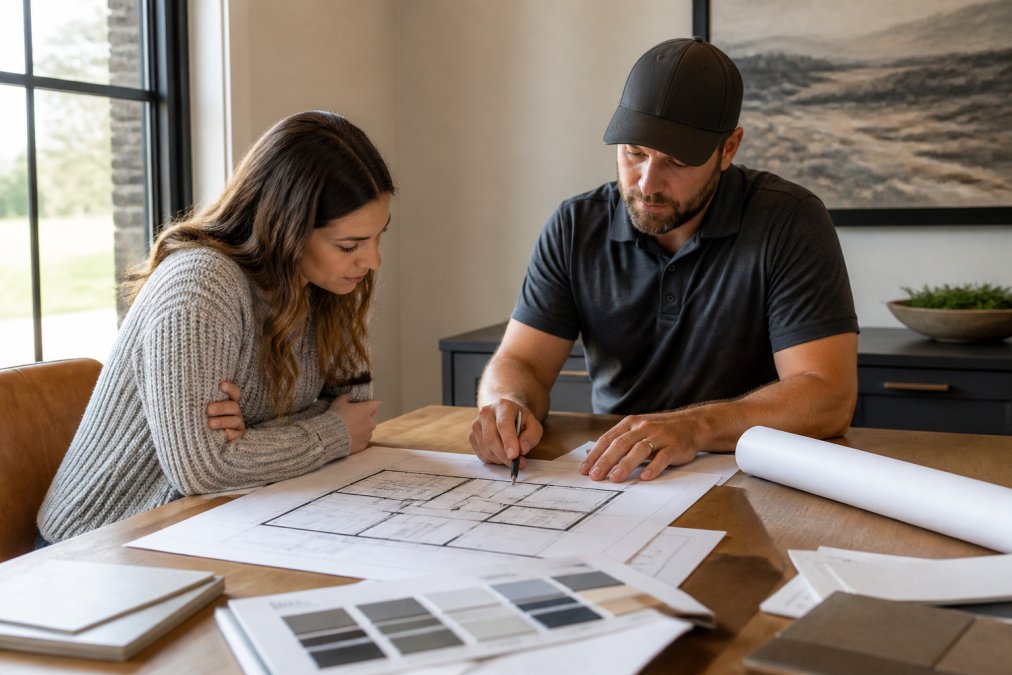
Use this checklist to evaluate each builder you’re considering:
| Evaluation Criteria | What to Look For | Why It Matters |
|---|---|---|
| Experience with your home type | Completed similar projects (size, style, budget) | Builders with relevant experience deliver better results faster |
| Design process clarity | Clear steps from concept to final plans | Vague processes lead to misunderstandings and delays |
| Communication approach | Proactive updates, documented decisions | Regular communication prevents surprises and conflicts |
| Warranty and guarantees | Written coverage for structural and systems | Protection if defects emerge post-completion |
| Timeline transparency | Realistic schedules with contingency buffers | Unrealistic timelines indicate poor planning |
| References from completed projects | Actual clients willing to discuss their experience | Direct feedback reveals how the builder actually operates |
| Budget management track record | History of completing projects on budget | Previous overruns suggest poor cost control |
| Subcontractor quality | Long-term relationships with skilled trades | Consistent subcontractors mean better quality and fewer delays |
Start by asking each builder for references from clients who completed projects similar to yours. Call those references and ask specific questions: Did the timeline hold? Did costs stay within budget? How did the builder handle unexpected issues? Would they hire this builder again?
Next, discuss the builder’s design process in detail. How do they gather your requirements? How many design revisions are included? What happens if you want changes mid-project? A builder who clearly explains their process sets expectations upfront and tends to deliver fewer surprises.
Ask about warranty coverage. What does the builder guarantee, and for how long? A builder confident in their work should offer comprehensive warranty coverage backed by insurance.
Finally, trust your instinct about communication. Do you feel heard when you ask questions? Does the builder explain decisions clearly? The builder you choose will be your primary contact throughout construction, so personality fit and communication style matter as much as technical credentials.
Builders who pressure you to decide quickly, avoid answering specific questions, or offer prices significantly below competitors are red flags. Legitimate custom builders have full schedules and don’t need to rush you. If something feels off during initial conversations, it’s worth exploring other options.
New Home Warranty Requirements in Alberta
Understanding warranty coverage is essential when choosing a custom home builder. Alberta’s regulatory environment provides baseline protections, but builders often offer coverage beyond the minimum.
In Alberta, new home warranty coverage is governed by the Alberta New Home Warranty Act (alberta.ca). This legislation requires builders to provide warranty coverage for structural defects and systems. The standard coverage includes:
- Structural warranty: Coverage for major structural defects typically lasts ten years from the date of possession
- Systems warranty: Coverage for mechanical systems, plumbing, and electrical systems typically lasts two years
- Workmanship warranty: Coverage for finishing defects and workmanship typically lasts one year
These are minimum requirements. Many builders offer extended coverage or more comprehensive warranties. When evaluating builders, ask specifically about their warranty offerings and whether they exceed the statutory minimum. A builder willing to extend coverage demonstrates confidence in their work quality.
The warranty protects you if significant defects emerge after you take possession. Common covered items include foundation cracks, roof leaks, plumbing failures, and HVAC system breakdowns. Minor cosmetic issues typically aren’t covered, but major functional problems are.
Understanding what’s covered prevents disputes after possession. Request a detailed warranty document from each builder you’re considering. For additional protection, consider having a professional home inspection completed near the end of construction, before you take possession. An inspector can identify defects while the builder is still responsible for corrections.
Choosing among Veneto Homes alternatives means evaluating your priorities: design flexibility, luxury acreage expertise, hands-on craftsmanship, or high-performance durability. Each builder excels in different dimensions. The strongest choice depends on what matters most to your specific project and lifestyle.
At Mario Laflamme Contracting & Renovation Ltd, we understand the complexity of custom home building. Our team has helped St. Albert homeowners navigate builder selection, design decisions, and construction planning. If you’re ready to explore custom home options or need guidance on evaluating builders, contact us for a free consultation and let’s discuss how we can support your project from vision to completion.
Frequently Asked Questions
What should I look for when comparing custom home builders as Veneto Homes alternatives?
Evaluate builders on experience, quality of craftsmanship, communication style, warranty coverage, and alignment with your budget and design vision. Review past projects, check references from clients in your area, verify licensing and insurance, and ensure they offer transparent project timelines. Ask about their approach to change orders and how they handle unexpected construction challenges. A strong builder should guide you through the entire process, not just execute your plans.
How do I build a custom home without an architect?
Many custom home builders offer design-build services where they guide you through the design process without requiring a separate architect. Work directly with the builder’s design team to develop floor plans and specifications. Start with your functional needs, lifestyle preferences, and budget.
The builder can advise on feasible layouts, building codes, and material choices. Some builders use 3D visualization tools to help you refine the design before construction begins. This approach often saves money and streamlines decision-making.
What are the new home warranty requirements in Alberta?
New homes in Alberta typically include a one-year warranty covering defects in workmanship and materials, a two-year warranty on major systems like plumbing and electrical, and a ten-year structural warranty. Builders must provide written warranty documentation. These requirements protect you against major defects after possession.
Ask your builder which warranty provider they use and request a detailed explanation of coverage limits. Verify that all warranties are transferable if you sell within the coverage period, and understand what exclusions apply.
How long does a typical custom home build take?
A custom home build typically takes 12 to 18 months from design approval to possession, depending on complexity, lot preparation, and weather. Design and permitting phases usually account for 2-4 months. Foundation and framing take 3-4 months.
Interior finishing, mechanical systems, and inspections extend the timeline another 4-6 months. Delays can occur due to permit approvals, material shortages, or site conditions. Ask your builder for a detailed project schedule and discuss contingencies for potential delays upfront.
How do custom home builders handle unexpected costs during construction?
Professional builders manage unexpected costs through a change order process. Before construction begins, establish a contingency budget (typically 5-10% of the total project cost) for unforeseen issues like site conditions or code requirements. Any changes to the original scope must be documented in writing with revised costs and timelines.
Ask your builder upfront how they handle discoveries like poor soil conditions, hidden structural issues, or utility relocations. Clear communication and a detailed initial contract help minimize surprises and disputes.
This article was written using GrandRanker

Table of Contents
Start With Project Goals and a Clear ScopeDefine Menu and Service RequirementsSet Measurable Renovation GoalsCommercial Kitchen…
Table of Contents
Diagnose Your Basement Moisture Before InsulatingIdentifying water intrusion sourcesMeasuring moisture levelsBest Insulation for…