
How to Choose Exterior Siding for Cold Climates
Table of Contents
- Best Siding Materials for Cold Climates
- Cold Climate Siding Installation Considerations
- Siding Replacement Cost Estimates: What to Expect
- Checklist for Choosing Cold Climate Siding
- Working with Exterior Renovation Contractors in St. Albert
- Common Mistakes to Avoid
- Frequently Asked Questions
Last Updated: September 27, 2026
Best Siding Materials for Cold Climates
Choosing the right siding for a cold climate comes down to how a material handles freeze-thaw cycles, moisture, and temperature swings. The best options for cold climate siding are engineered wood, fiber cement, insulated vinyl, and metal, because each one resists cracking, warping, or water damage when temperatures drop well below freezing.
This guide from Mario Laflamme Contracting & Renovation Ltd breaks down how to choose exterior siding for cold climates St. Albert homeowners can rely on for decades.
Below, we’ll cover the materials that hold up, the installation details that matter most in winter, and a simple checklist you can use before you commit.
Engineered Wood and Fiber Cement
Engineered wood and fiber cement are the two strongest performers in freeze-thaw conditions. Both hold paint well, resist impact, and stay dimensionally stable when the temperature swings from -30°C to above freezing and back.
Fiber cement costs more upfront than vinyl, but it holds up to hail and doesn’t crack in deep cold. Engineered wood offers a similar look with a slightly lighter weight. The trade-off is that both need proper sealing and repainting over time.
- Fiber cement: Best for long-term durability and low maintenance
- Engineered wood: Best for a natural wood look without the rot risk
- Both: Require correct clearances and a solid moisture barrier
Vinyl and Insulated Vinyl
Standard vinyl is the budget option, and it’s where most cold-climate problems start. Cheap vinyl gets brittle in extreme cold and can crack on impact.
Insulated vinyl solves most of that. The foam backing adds rigidity and a small boost to your wall’s R-value, which helps in a climate with a long heating season.
If budget is tight, insulated vinyl is worth the extra cost over standard vinyl. Standard vinyl on a north-facing wall in St. Albert is a gamble.
Metal and Composite Options
Metal siding handles cold better than almost anything. It doesn’t absorb water, crack, or feed mold. The main complaints are noise during temperature changes and a higher upfront price.
Composite options blend polymer and wood fiber. They resist moisture and insects well, but quality varies widely between brands. Ask for cold-weather performance data before you buy.
For homeowners who want minimal upkeep, metal is the clear winner. For those who want a wood look, composite is a reasonable middle ground.
Cold Climate Siding Installation Considerations
Good installation matters more than the material itself in a cold climate. Even premium siding will fail if it’s nailed tight, sealed wrong, or installed over a wet wall.
Two details decide whether your siding survives 20 winters: expansion gaps and moisture control.
Expansion and Contraction Gaps
Siding moves as it heats and cools. In a cold climate, that movement is severe.
Nail siding loosely, in the center of the nailing slot, so panels can slide. Nail it tight and the panel will buckle or crack when it contracts.
Leave the recommended gap at every joint and corner.
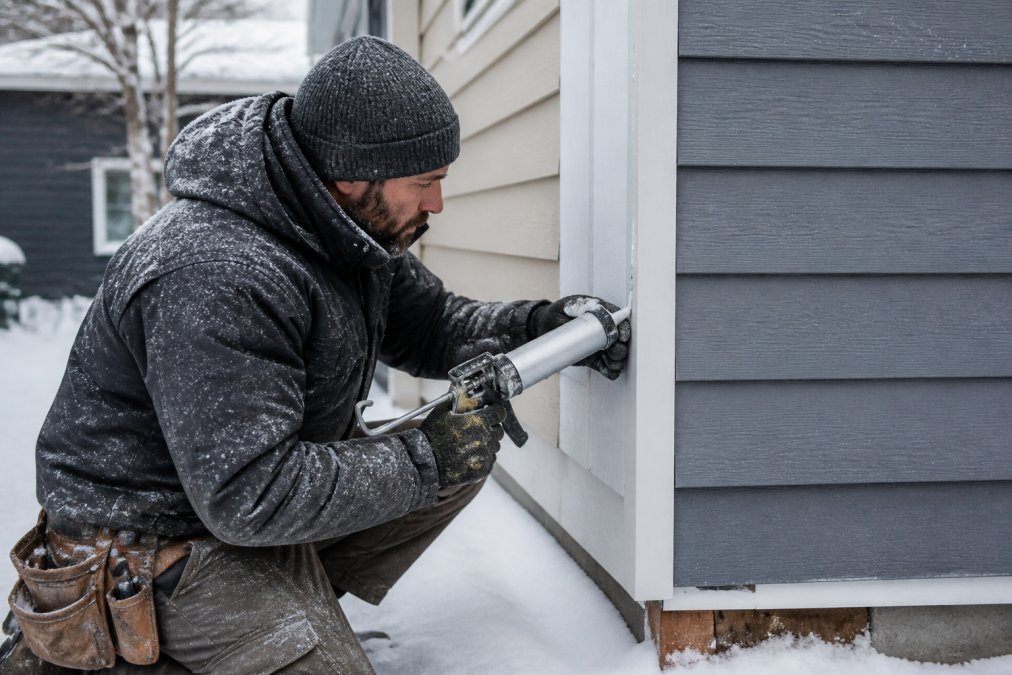
Moisture Barrier and Ventilation
Water is the real enemy, not cold. Trapped moisture rots sheathing and framing long before the siding itself fails.
Install a proper weather-resistive barrier behind the siding. Keep a drainage gap so any water that gets in can escape. Seal penetrations around windows and vents with the right flashing.
Ventilation behind the siding lets the wall dry. Skip it and you’re trapping moisture in the worst possible place.
Nailing siding tight to save time is the fastest way to void a warranty. Panels that can’t move will crack or buckle within a few winters, and most manufacturers won’t cover damage caused by improper fastening.
Siding Replacement Cost Estimates: What to Expect
Siding replacement cost estimates depend on material, square footage, and how much prep work your walls need. There’s no single number, and any contractor who quotes one without seeing your home is guessing.
What drives the price:
- Material choice: Metal and fiber cement cost more than vinyl
- Home size and height: More stories means more labor and equipment
- Wall condition: Rotten sheathing or old layers to remove adds cost
- Trim and details: Windows, corners, and soffits add time
- Access: Tight lots and landscaping slow the job down
Get at least two written quotes. Ask what’s included and what’s extra. A low quote that excludes prep work isn’t a deal, it’s a surprise waiting to happen.
For accurate pricing on your home, request a free consultation and we’ll assess your walls in person.
Checklist for Choosing Cold Climate Siding
Use this checklist before you sign anything. It covers the decisions that matter most in a cold climate.
- Confirm the material is rated for freeze-thaw cycles
- Check the manufacturer’s cold-weather warranty terms
- Ask how expansion gaps will be handled
- Confirm a moisture barrier and drainage gap are included
- Get written quotes from at least two contractors
- Ask for local references you can actually call
- Confirm the contractor is licensed and insured
- Clarify what happens if hidden damage is found
- Get the timeline in writing
- Review the payment schedule before work starts
Ask your contractor for addresses of homes they’ve sided in the area at least three winters ago. New installations always look good. Three winters later is when you find out if the expansion gaps and flashing were done right.
Working with Exterior Renovation Contractors in St. Albert
The contractor you hire matters as much as the material. Exterior renovation contractors in St. Albert deal with the same freeze-thaw pattern every year, so local experience counts.
Ask three questions before you hire:
- Are you licensed and insured, and can I see proof?
- Can you give me local references from similar projects?
- How do you handle surprise costs if you find hidden damage?
A good contractor answers all three without hesitation. A vague answer on any of them is a red flag.
At Mario Laflamme Contracting & Renovation Ltd, we handle siding, roofing, and fencing as part of full exterior renovations. We also manage interior work, from kitchens and bathrooms to basements and custom home builds.
We walk you through the process from the first site visit to the final inspection.
Common Mistakes to Avoid
Most siding failures trace back to a handful of avoidable mistakes.
- Choosing on price alone. The cheapest quote usually skips prep work that protects your walls.
- Nailing panels tight. Siding needs room to move or it cracks.
- Skipping the moisture barrier. Water trapped behind siding rots your framing.
- Ignoring wall condition. Siding over rotten sheathing just hides the problem.
- Hiring without checking references. A license alone doesn’t prove quality work.
- Forgetting the details. Corners, flashing, and trim are where leaks start.
The material matters, but installation quality decides how long your siding lasts. A mid-range product installed correctly will outlast premium siding installed badly, every time.
Cold weather is unforgiving on exterior walls, and the wrong material or a rushed install will show its flaws within a few winters. Mario Laflamme Contracting & Renovation Ltd helps St. Albert homeowners get this right the first time, with siding, roofing, and fencing services backed by professional project management and quality craftsmanship.
We assess your walls, recommend the right material for your home, and handle the full exterior upgrade from start to finish. Get started with Mario Laflamme Contracting & Renovation Ltd and book your free consultation today.
Frequently Asked Questions
What is the most durable siding for freezing temperatures?
Engineered wood and fiber cement handle freeze-thaw cycles best because they resist cracking and warping when temperatures drop below -30°C. Vinyl can become brittle in extreme cold, so if you choose vinyl, look for insulated vinyl rated for cold climates. Metal siding also performs well but can dent. The key is proper installation with expansion gaps to allow for movement without damage.
How does extreme cold affect different types of siding materials?
Cold causes materials to contract, and when temperatures swing, they expand again. Vinyl contracts more than other materials, which can lead to buckling if installed too tight. Fiber cement and engineered wood are more dimensionally stable. Metal expands and contracts significantly, so fasteners must allow movement. Moisture trapped behind siding can freeze and push panels out, so a proper moisture barrier is critical in cold climates.
What maintenance does exterior siding require before winter arrives?
Before winter, inspect for cracks, loose panels, or gaps around windows and doors. Reapply caulking where needed to prevent water infiltration. Clear debris from weep holes and ensure gutters are clean so meltwater drains away from the siding. For wood siding, check for peeling paint and touch up as needed. A quick fall inspection can prevent costly freeze-thaw damage.
How do I choose a siding contractor for my renovation project?
Look for a contractor with local experience in cold climates, proper licensing, and liability insurance. Ask for references from recent projects in your area and check that they follow manufacturer installation guidelines for your chosen siding. Get a detailed written estimate that includes materials, labor, and timelines. A reputable contractor will also explain how they handle unexpected issues like rotted sheathing.
Table of Contents
Diagnose Your Basement Moisture Before InsulatingIdentifying water intrusion sourcesMeasuring moisture levelsBest Insulation for…
Table of Contents
1. Optimize Your Small Kitchen Layout Ideas for Better FlowGalley Layouts for Narrow SpacesL-Shaped ConfigurationsSingle-Wall…