
Bathroom Remodel Timeline: What to Expect in 2026
Table of Contents
- Why Bathroom Remodel Timelines Stretch in 2026
- The 7 Stages of a Bathroom Remodel
- Average Bathroom Remodel Duration: Week-by-Week Breakdown
- Key Factors That Control Your Bathroom Remodel Timeline
- How Hiring a Professional Bathroom Contractor Saves Time
- Planning for Delays: Permits, Materials, and Living Logistics
- Set a Realistic Timeline for Your 2026 Remodel
- Frequently Asked Questions
Last Updated: September 5, 2026
Why Bathroom Remodel Timelines Stretch in 2026
A bathroom remodel timeline expectations 2026 guide has to start with an honest truth: the days of a tidy three-week bathroom renovation are largely behind us. Between material procurement delays, tight subcontractor schedules, and municipal permit approval backlogs, most projects now run longer than homeowners initially plan for. The bathroom remodel timeline is no longer just about the work itself; it is about how long it takes to get everyone and everything to the site.
What most guides miss is that the schedule is set long before demolition begins. The team at Mario Laflamme Contracting & Renovation Ltd sees projects where the planning and material ordering phase takes as long as the construction itself. A realistic bathroom remodel timeline expectations 2026 approach accounts for these upstream bottlenecks, not just the weeks of visible construction.
Below, we break down the stages, the week-by-week reality, and the factors that will either compress or stretch your schedule.
The 7 Stages of a Bathroom Remodel
A typical bathroom remodel follows seven distinct stages, each with its own duration and potential for delay. Understanding these stages of a bathroom remodel helps you track progress and know what should happen next.
- Pre-construction and planning: Design decisions, fixture selection, and material procurement. This stage often runs 2-4 weeks before any work begins.
- Demolition: The full gut of the old space down to the studs. Usually 2-4 days, but can reveal surprises like outdated wiring or water damage.
- Rough-in: The critical phase where plumbing and electrical wiring are repositioned. This requires inspections before walls can be closed.
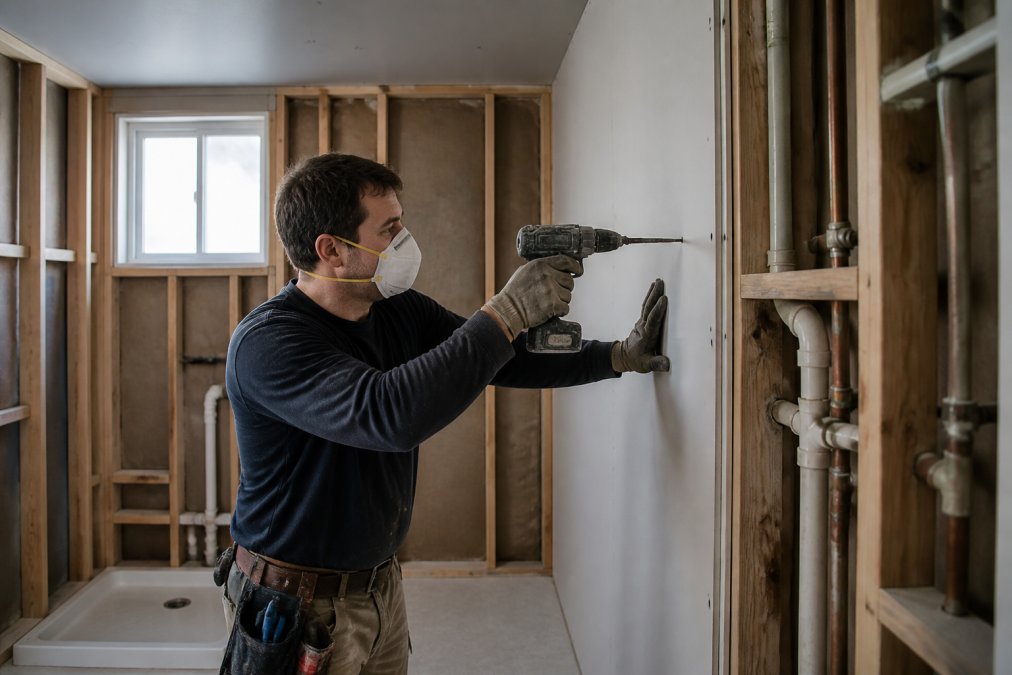
- Drywall installation and taping: Closing up the walls, then allowing mud and tape to dry between coats.
- Tile installation and waterproofing: Floor and wall prep, followed by tile setting, grouting, and curing time.
- Fixture installation and finishing: Vanity installation, toilet hookup, lighting, and trim work.
- Final punch list and inspection: The walkthrough where small fixes are completed and the project is closed out.
Average Bathroom Remodel Duration: Week-by-Week Breakdown
The average bathroom remodel duration for a full gut renovation typically lands between six and eight weeks of active construction (hgtv.com). That figure assumes no major surprises and that materials arrived on time. A 3-piece bathroom may run slightly shorter, while a 4-piece bathroom with a separate tub and shower adds days to the waterproofing and tile installation phases.
| Project Type | Active Construction | Typical Total Timeline |
|---|---|---|
| 3-piece bathroom (stand-up shower) | 4-5 weeks | 7-9 weeks with planning |
| 4-piece bathroom (tub and shower) | 6-7 weeks | 9-11 weeks with planning |
| Full gut with layout changes | 7-8 weeks | 10-12 weeks with planning |
Week one is demolition and rough-in. Weeks two and three cover plumbing and electrical work, including the required inspections. Week four brings drywall installation. Weeks five and six are dedicated to tile installation, waterproofing, and grouting, which needs proper curing. Week seven handles vanity installation, fixtures, and the final punch list. If you are moving walls or changing the layout, add a week for framing and rerouting.
Key Factors That Control Your Bathroom Remodel Timeline
Several variables will either compress or extend your bathroom remodel timeline, and most of them are decided before the first hammer swings. Project scope is the biggest driver. A cosmetic refresh with new fixtures and paint is fundamentally different from a full gut that relocates plumbing. But in 2026, the factor that separates a smooth project from a stalled one is material procurement.
The 2026 Material Lead-Time Reality
Most timeline guides treat material selection as a simple shopping task. In practice, it is the #1 cause of schedule slippage this year. The issue is not just that items are back-ordered; it is that lead times vary wildly by product category and are rarely quoted accurately at the retail counter.
A common pattern is a homeowner choosing a vanity that the showroom says will arrive in “2-3 weeks,” only to discover after demolition that the manufacturer’s actual lead time is 8 weeks.
Build a lead-time checklist before you commit to a start date. For each major item, get a written confirmation of the lead time from your supplier, not just a verbal estimate. The critical items to track are:
- Vanities and custom millwork: 4-10 weeks is typical for made-to-order units. Stock units are faster but limit your finish options.
- Custom glass shower enclosures: These are fabricated to measure after your tile is set, which means they cannot be ordered early. Budget 2-3 weeks for fabrication and delivery once the template is taken.
- Specialty tile and natural stone: If it is not in local warehouse stock, expect 3-6 weeks for special orders. Slabs for countertops or niche backsplashes often require a separate templating visit before cutting.
- Plumbing fixtures and faucets: Popular finishes like brushed gold or matte black are frequently on allocation. Confirm stock at the time of order, not at the time of delivery.
The mechanism that breaks schedules is sequencing. Your contractor can order the vanity in week one of planning, but the glass enclosure cannot be ordered until week five when the tile is done. If you are sourcing materials yourself, you are responsible for that coordination. If a professional contractor handles procurement, they build these lead times into the schedule from day one.
Labor Availability and the Post-2026 Squeeze
Labor availability is the second major factor. Skilled subcontractors book out weeks in advance, so a contractor with established crews has a structural advantage. What changed in 2026 is the compounding effect of labor costs on scheduling. When trades are busy, they are less willing to squeeze in a small bathroom job between larger projects. A contractor who can guarantee a full week of work for a tile setter gets priority over one who only needs them for two days.
This creates a hidden timeline risk: the gap between phases. A tile setter who finishes on a Wednesday may not be able to return for grouting until the following Monday because they have committed to another site. A professional contractor sequences work to minimize these gaps, but a DIY project manager often discovers them only after the fact.
The Inspection Bottleneck
Permitting and inspection timelines are a third factor that most guides mention but rarely quantify. Municipal inspection windows vary, but a common pattern is 24-72 hours between your request and the inspector’s visit (nahb.org). If the inspector flags an issue, you lose another cycle. Digital permit tracking tools can help you monitor where your application sits in the queue, but they do not speed up the inspector. The practical workaround is to schedule inspections early in the week, so a failed inspection does not push you into a weekend of dead time.
If you are ordering a custom vanity or specialty tile, get the lead time in writing before you sign a contract. Verbal estimates are not binding, and a 4-week discrepancy between the quoted and actual lead time is the single most common cause of bathroom remodel delays in 2026.
How Hiring a Professional Bathroom Contractor Saves Time
Hiring a professional bathroom contractor compresses your timeline in ways a DIY approach cannot match. The reason is simple: coordination. A general contractor manages the sequence of trades, orders materials at the right moment, and schedules inspections so there is no dead time between phases.
A common mistake homeowners make is acting as their own project manager to save money. In practice, this means waiting on subcontractor callbacks, missing inspection windows, and discovering that the tile you ordered is on backorder only after the drywall is up. A professional contractor like Mario Laflamme Contracting & Renovation Ltd handles the material procurement and subcontractor scheduling as part of the service. The brand’s project management approach for renovations keeps the construction schedule moving, which is why professional bathroom renovation consultations often start with a detailed timeline review before any work is booked.
Planning for Delays: Permits, Materials, and Living Logistics
Even with a professional contractor, delays happen. The most common culprits are permit approval, material lead times, and unexpected findings behind the walls. Building codes require permits for plumbing and electrical changes, and inspection scheduling is not always immediate. What separates a well-managed project from a stalled one is how you handle these three areas before they become problems.
Digital Permit Tracking: Shaving Days Off the Waiting Phase
Most homeowners treat the permit process as a black box: you submit, you wait, you hope. In 2026, most municipalities offer online portals that let you track your application status in real time. The mechanism is simple: your contractor submits the application, receives a file number, and you can monitor whether the application is in review, approved, or requires revisions.
The practical benefit is not just visibility; it is the ability to act. If your application has been sitting in “review” for five business days, a polite follow-up call to the permit office often moves it forward. If revisions are required, you find out immediately rather than discovering it two weeks later when the inspector shows up.
A professional contractor checks these portals daily and flags issues the moment they appear. If you are managing the project yourself, set a calendar reminder to check the portal every morning.
The Single-Bathroom Living Problem
If you have only one bathroom, the timeline is not just about construction; it is about how long you can manage without the amenity. Most guides gloss over this, but it is the most practical concern for homeowners. The reality is that a full gut renovation takes your only bathroom out of service for 4-6 weeks. That is not a weekend inconvenience; it is a lifestyle change.
Plan for the disruption before demolition begins. A common pattern is to rent a portable toilet for the duration, but that only solves the basic need. Showering is the harder problem.
Options include a gym membership, using a neighbor’s facility with permission, or scheduling the rough-in phase so that a temporary shower can be installed early. Some contractors can install a temporary utility sink and shower head on the rough-in plumbing, giving you a basic washing station for the final weeks of the project.
Remote work adds another layer. Dust and noise from demolition and tile cutting make working from home during a renovation challenging. If your home office is near the bathroom, expect to relocate your workspace for the noisiest weeks. A practical approach is to schedule the demolition and rough-in phases during a week when you can work from a coffee shop or library, then return home for the quieter finishing stages.
The Backup Material Plan
Material procurement is where many bathroom remodel timeline expectations 2026 plans go wrong. If you have selected a specific vanity or tile, confirm the lead time and have a backup option ready. The backup does not need to be identical; it needs to be available. A common pattern is choosing a primary tile and a secondary tile that is in local warehouse stock. If the primary is delayed, you switch to the backup without losing a week of construction time.
Post-2026 inflation and labor cost pressures have made subcontractors busier, which tightens availability. This means the cost of a delay is not just the extra days; it is the risk of losing your subcontractor to another job. A contractor who has to pause for a week waiting for materials may find their tile setter is no longer available when the materials arrive. This is why the lead-time checklist matters: it prevents the pause in the first place.
Before demolition, ask your contractor for a written schedule that includes buffer days between phases. A 6-week construction schedule with 3 buffer days built in is more realistic than a tight 5-week schedule with no slack. The buffer days absorb minor delays without pushing your project into the following month.
Set a Realistic Timeline for Your 2026 Remodel
Setting a realistic bathroom remodel timeline starts with honest expectations about your project scope and the current market conditions. A cosmetic update might take four weeks, while a full gut with layout changes can stretch past eight weeks of active work. Factor in two to four weeks of planning and material procurement before the construction phase begins.
The most effective way to protect your schedule is to work with a contractor who provides a clear construction schedule and manages the details. The Canada Mortgage and Housing Corporation renovation guidance recommends homeowners budget for contingencies and confirm project scope before work begins. At Mario Laflamme Contracting & Renovation Ltd, we provide professional project management for bathroom remodels, handling the coordination so you are not chasing subcontractors or wondering what happens next. A free consultation is the first step to understanding what your specific project will require.
Frequently Asked Questions
Is it realistic to complete a full bathroom remodel in under four weeks?
For a basic update with no layout changes, it can be done if materials are in stock and permits are quick. However, a full gut remodel typically takes 6 to 8 weeks. Trying to rush the process often leads to mistakes in waterproofing or tile work that cost more time later. Plan for 8 weeks to have a buffer for inspection delays or back-ordered fixtures.
What factors cause delays in bathroom renovation projects?
The biggest delays come from material lead times, especially for custom vanities or specialty tile. Permit approval and inspection scheduling also add time. Unexpected issues like old plumbing or electrical wiring discovered after demo can extend the schedule by a week or more. Labor availability is another factor, as skilled subcontractors book up quickly.
How do supply chain conditions in 2026 impact renovation schedules?
While some supply chain pressure has eased, lead times for certain fixtures and finishes remain longer than pre-2020. Items like custom glass shower enclosures or specialty faucets may take several weeks to arrive. This is why a contractor who orders materials early, before demolition starts, keeps your project on track.
What is the correct order to remodel a bathroom?
The process starts with demolition and rough-in for plumbing and electrical. After inspections, drywall goes up, followed by waterproofing in the shower area. Tile installation comes next, then the vanity and toilet are set. The final steps include installing the shower door, mirrors, and lighting, ending with a punch list to fix any small details.
Setting a realistic timeline for your 2026 bathroom remodel is about preparation as much as construction. The team at Mario Laflamme Contracting & Renovation Ltd offers comprehensive renovation solutions that keep your project on track from planning through the final punch list. Get started with a free consultation and see how professional project management protects your schedule and your investment.
This article was written using GrandRanker
Table of Contents
Start With Project Goals and a Clear ScopeDefine Menu and Service RequirementsSet Measurable Renovation GoalsCommercial Kitchen…

Table of Contents
Diagnose Your Basement Moisture Before InsulatingIdentifying water intrusion sourcesMeasuring moisture levelsBest Insulation for…