
Eco-Friendly Bathroom Upgrades: What Saves Water Most
Last Updated: November 3, 2026
Quick Summary
Low-flow toilets, faucets and showerheads are the bathroom upgrades that save the most water, cutting bathroom water consumption by up to 60%. Start with the toilet, the largest single water user, then add a high-efficiency showerhead and faucet aerators.
- Modern low-flow toilets use 4.8 litres per flush or less.
- A household of four can save roughly 60,000 litres of water a year with a low-flow toilet.
- Showering accounts for roughly 17% of total household water usage.
- High-efficiency taps can limit consumption to a maximum of 5 litres per minute.
- Drain-water heat recovery can cut water-heating energy by up to 40%.
Table of Contents
- Why Water Consumption Is the First Thing to Fix in Any Bathroom Upgrade
- Low-Flow Toilets and Dual-Flush Models: The Biggest Single Saving
- What Low-Flow Toilet Installation Cost Really Includes
- The Benefits of High-Efficiency Showerheads for Daily Water Use
- Faucets, Aerators and Flow Rates: Small Fixtures, Measurable Savings
- Smart Leak Detection and Drain-Water Heat Recovery
- What a Professional Bathroom Renovation Consultation Should Cover
- Book Your Free Bathroom Upgrade Consultation
- Frequently Asked Questions
Why Water Consumption Is the First Thing to Fix in Any Bathroom Upgrade
Water is where the money and the waste both live in bathroom upgrades. According to One Week Bath’s eco-friendly bathroom design guide, low-flow toilets, faucets, and showerheads can cut bathroom water consumption by up to 60%. That is a bigger swing than any tile, vanity, or paint choice will deliver. At Mario Laflamme Contracting & Renovation Ltd, we tell homeowners the same thing before every remodel: fix the flow first, then make it beautiful.
Here is the tension most renovation guides skip. Aesthetic upgrades like reclaimed wood vanities or low-VOC paints improve indoor air quality and material sustainability, but they do not touch the main driver of bathroom resource consumption: water volume. If you are planning eco-friendly bathroom upgrades to reduce water consumption, the fixtures come first and the finishes come second.
That is not an argument against sustainable materials. It is a sequencing argument. Get the water side right, then layer in the green finishes. If you want the wider case for those materials, our guide on benefits of sustainable home renovation materials covers it.
Low-Flow Toilets and Dual-Flush Models: The Biggest Single Saving
The toilet is the largest single water user in most bathrooms, which makes it the highest-value swap. Modern low-flow models cut usage per flush to 4.8 litres, or less, according to JM Woodworks’ eco-friendly renovation guidance. Dual-flush models go further, offering a short flush for liquids and a full flush when needed.
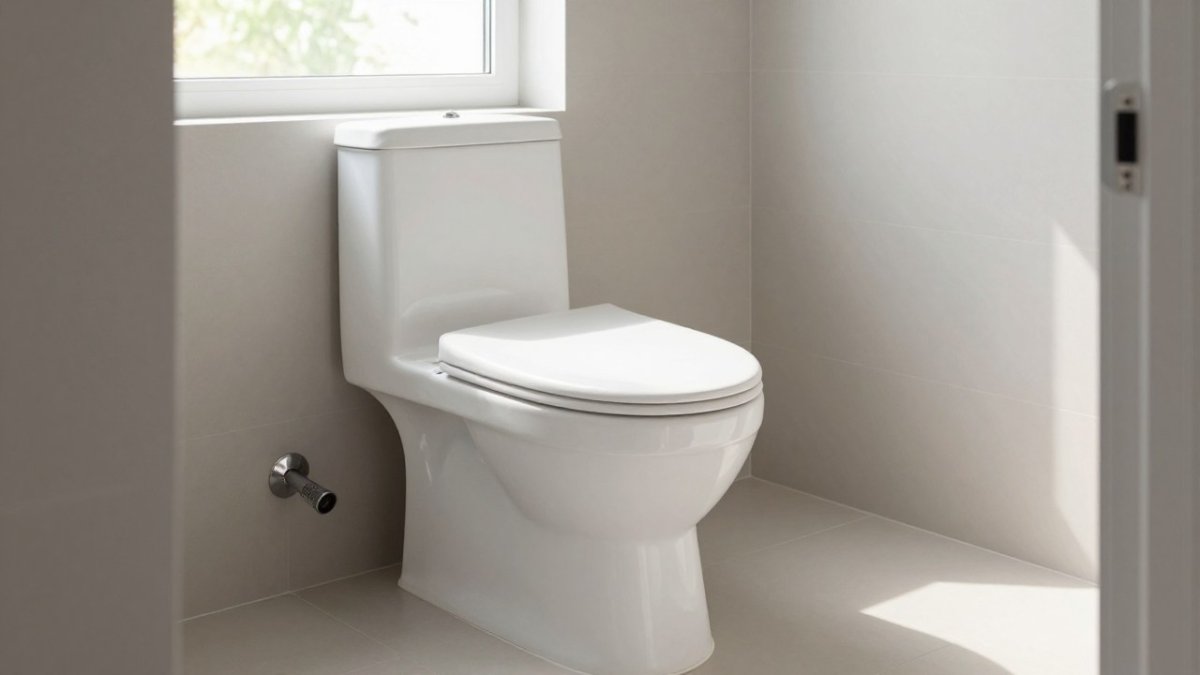
Watch out: a high-efficiency toilet paired with old, narrow drain lines can clog more often. Have the drain and venting checked before you buy the fixture, not after.
The toilet is the biggest water user in most bathrooms, and the payback math shows why it comes first.
| Item | Value | Note |
|---|---|---|
| Modern low-flow toilet usage | 4.8 litres per flush or less | Largest single water user in most bathrooms |
| Legacy toilet usage | Roughly 13 litres per flush | Baseline for payback comparison |
| Household of four, 20 flushes a day | About 260 litres down to about 96 litres daily | Saving of roughly 164 litres per day |
| Annual saving | About 60,000 litres a year | Recurring credit on every utility bill |
| Dual-flush models | Short flush for liquids, full flush when needed | Goes further than standard low-flow |
| Installation scope | Toilet, old unit removal and disposal, supply line, wax seal | Sometimes flange repair or drain work |
| Rebates and standards | Vary by municipality and province | Confirm eligible model list with local utility |
What Low-Flow Toilet Installation Cost Really Includes
The fixture price is only part of the number. A low-flow toilet installation typically includes the toilet itself, removal and disposal of the old unit, a new supply line and wax seal, and sometimes a flange repair once the old toilet comes up. Older homes occasionally need drain work too, and that is the line item that most often turns a simple swap into a plumbing job.
Because pricing depends on your plumbing, layout, and what the removal reveals, we quote each project individually rather than publish a flat figure. For broader budget context, our bathroom remodel cost guide walks through how fixture costs sit inside a full renovation budget.
The payback math is where a low-flow toilet separates itself from every other bathroom upgrade. Take a legacy toilet at roughly 13 litres per flush and a modern high-efficiency model at 4.8 litres. A household of four flushing, say, 20 times a day goes from about 260 litres to about 96 litres daily, a saving of roughly 164 litres per day, or about 60,000 litres a year.
At typical municipal water and sewer rates, that is a recurring credit on every utility bill for the life of the fixture, and it compounds if your area moves to tiered or seasonal water pricing.
Watch out: rebates and efficiency standards vary by municipality and by province, so confirm the current eligible model list with your local utility before you buy, a fixture that qualifies in one service area may not qualify in the next.
That is the upgrade that keeps paying you back long after the invoice is paid, and it is the one we recommend sequencing first in almost every bathroom renovation.
The Benefits of High-Efficiency Showerheads for Daily Water Use
Showering accounts for roughly 17% of total household water usage, according to Buffalo River Review’s sustainable bathroom feature. That makes the showerhead the second-biggest target after the toilet, and the easiest one to change.
The benefits of high-efficiency showerheads come down to flow rate. A standard unit can push far more water than you need; a low-flow model caps the flow while keeping the spray comfortable. Options we recommend:
If you are still deciding between a tub and a shower layout, our walk-in shower vs bathtub comparison breaks down the trade-offs before you commit.
Faucets, Aerators and Flow Rates: Small Fixtures, Measurable Savings
The cheapest water-saving upgrade in the room costs about as much as lunch. A faucet aerator screws onto an existing spout and mixes air into the stream, cutting flow without killing pressure. High-efficiency taps can limit consumption to a maximum of 5 litres per minute, according to Noken’s water consumption strategies.
A common mistake is ignoring the aerator on an otherwise new faucet. Check the flow rate on the box before you buy. If it is not rated, assume it is not efficient.
Flow rate is the number that matters, and it is easy to compare once you know the units. Checking the rated flow of an aerator before you buy is a practical way to compare options.
Compatibility is where aerators and faucets trip people up. Aerators are sized by thread diameter and thread type, the common sizes are regular and junior, with male and female threads, so measure the existing spout or take the old aerator to the store. Some modern faucets use a proprietary cache aerator that needs a small removal key, and a few integrated-spout designs cannot take a standard aerator at all.
If your tap is a single-lever model with a pull-out spray, check whether the flow restrictor is serviceable before assuming you can swap it.
Verification matters as much as the spec sheet. Check the manufacturer’s published flow rate at a stated pressure rather than relying on general marketing terms, and ask how the rating was tested.
Watch out: a low-flow aerator on a faucet with a failing cartridge will still drip, and a dripping tap can waste more water in a week than the aerator saves in a month, fix the leak first, then upgrade the flow.
Smart Leak Detection and Drain-Water Heat Recovery
Two upgrades sit behind the wall and pay you back quietly. A smart water monitor tracks usage in real time and shuts the supply off when it detects a leak. A drain-water heat recovery unit captures heat from warm shower water and uses it to pre-heat incoming cold water, cutting water-heating energy by up to 40%, per Renewability’s drain water heat recovery data.
These are often easiest to add during a renovation when the plumbing is already open.
What a Professional Bathroom Renovation Consultation Should Cover
A professional bathroom renovation consultation should answer three questions before anyone swings a hammer: what is your current water use, which fixtures deliver the biggest saving for your layout, and what will the whole job realistically involve. If a contractor skips straight to finishes, that is a red flag.
Here is what we cover in ours:
- Current fixture audit: age, flow rates, and any signs of leaks
- Water-use priorities ranked by saving and cost
- Compatibility check on drains, venting, and electrical for smart devices
- Sustainable material options and where they fit the budget
- Scope, sequencing, and timeline in plain language
When you are ready to see how these upgrades come together in a real project, explore our bathroom renovation services for planning, coordination, and workmanship.
Book Your Free Bathroom Upgrade Consultation
The hardest part of a water-saving remodel is knowing which upgrade to do first. Get that order wrong and you spend money on finishes while the toilet keeps draining your budget. We work with homeowners on renovation planning and project scope.
At Mario Laflamme Contracting & Renovation Ltd, we handle bathroom remodels and provide project management for renovation work. Book a free consultation to discuss your bathroom project.
Book your free renovation consultation and start with the upgrade that pays you back first.
Frequently Asked Questions
What are the best water-saving fixtures for a bathroom renovation?
Start with the fixture that runs the longest: the toilet. A dual-flush model replaces older high-volume units and can deliver a significant reduction. Next, consider a low-flow showerhead and a faucet aerator. Replacing these fixtures can meaningfully reduce a bathroom’s water use.
How much water can a low-flow toilet save per year?
Modern low-flow toilets use less water per flush than older models. Because the toilet is one of the most-used fixtures in the house, the difference can add up over time. Exact savings depend on household size and flushing habits, so ask for a calculation based on your current fixtures during a professional bathroom renovation consultation.
Do high-efficiency showerheads affect water pressure?
A well-made low-flow showerhead keeps a strong spray by mixing air into the stream. A well-designed low-flow showerhead can keep the shower feeling full even though less water flows. Expect a different sensation from an old high-flow head, not a weak one. Showering is a significant share of household water use, so the showerhead is a worthwhile swap.
Are eco-friendly bathroom upgrades worth the investment?
The water-saving hardware does the heavy lifting. Water-saving fixtures can reduce water and water-heating costs over time, and drain-water heat recovery units can reduce water-heating energy use. Aesthetic choices like low-VOC finishes and recycled tile improve indoor air quality but do not reduce water volume, so budget for fixtures first and finishes second.
What is the most effective way to reduce water consumption in the bathroom?
Replace the three highest-use fixtures in order of impact: the toilet, the showerhead and the faucet. Then add leak detection. A smart water monitor can track consumption in real time and alert you to leaks. Pair the hardware with short showers and full laundry loads to lock in the savings.

Last Updated: November 4, 2026
Quick Summary
Cold-climate siding maintenance means washing panels annually, checking and renewing caulking, clearing…

Last Updated: November 2, 2026
Quick Summary
Commercial office interior design is the planning and construction of workspace layouts, finishes,…