
Is It Worth Repairing Old Aluminum Siding?
Last Updated: October 24, 2026
Quick Summary
Is it worth repairing old aluminum siding? It depends on damage extent, siding age, and your timeline. Siding under 20 years old with minor, localized damage and a sound structure is usually worth repairing, as targeted repairs can extend its life by years at a fraction of replacement cost.
- Soft spots, widespread warping, or deep corrosion indicate replacement is needed, not repair.
- Siding installed after 2010 is young enough that repairs are almost always justified and cost-effective.
- Siding 35 years or older is nearing end of life; continued repair becomes uneconomical.
- Painting works only if the siding is structurally sound; it masks problems without solving moisture infiltration.
- Get a professional assessment to identify hidden moisture damage before deciding between repair and replacement.
Table of Contents
- When Repairing Aluminum Siding Makes Sense
- Common Aluminum Siding Problems and Damage Assessment
- Aluminum Siding Repair Cost Breakdown
- Aluminum Siding Lifespan and Age Considerations
- Painting Aluminum Siding vs. Replacing It
- Repair Limitations: When Replacement Is Necessary
- Get a Professional Assessment for Your Siding
- Frequently Asked Questions
When Repairing Aluminum Siding Makes Sense
Is it worth repairing old aluminum siding? It depends on the extent of damage, the siding’s age, and how long you plan to stay. Understanding how different siding materials perform in cold climates can also inform whether aluminum is the right choice for your region.
At Mario Laflamme Contracting & Renovation Ltd, we help homeowners weigh repair against replacement. A small dent might seem minor, but if it lets moisture behind the panels, the real cost balloons once you factor in water damage to the sheathing.
The key distinction is cosmetic damage versus structural compromise. Surface dents, minor fading, and small punctures are generally repairable. Soft spots, widespread warping, or corrosion that has penetrated the metal mean repair alone won’t solve the problem, patching the exterior is like putting a bandage on an infection.
Common Aluminum Siding Problems and Damage Assessment
Aluminum siding fails in predictable ways. Here’s a panel-by-panel inspection you can walk yourself before calling anyone, plus the damage patterns that should push you toward replacement.
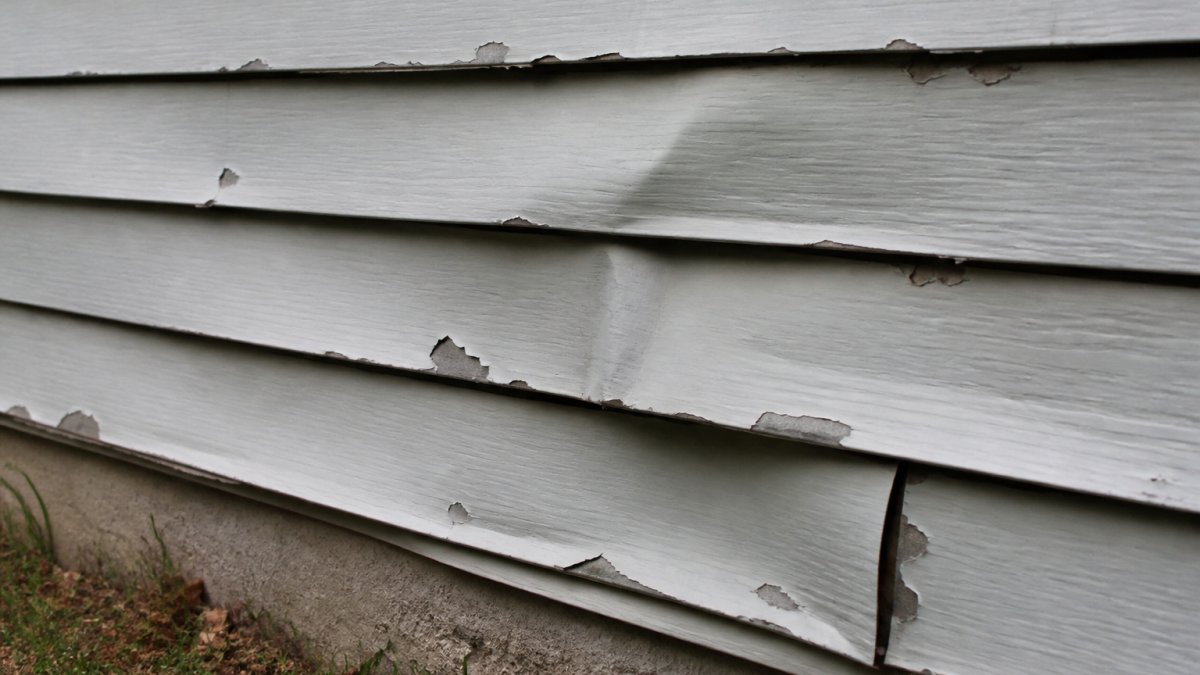
The damage patterns and what each one means
Dents and impact damage. A dent is a repair candidate if the metal isn’t cracked, the coating is intact, and the panel still sheds water.
Soft spots and moisture damage. Press firmly on panels at eye level and near the bottom of each wall.
Warping and buckling. Aluminum expands and contracts with temperature; some movement is normal.
Peeling paint and corrosion. White powdery spots are surface corrosion and can be cleaned and repainted. Pitting into the metal, or corrosion along the bottom edge where splash-back hits, signals the coating has failed and the panel is near end of life.
Gaps and separation at seams. Small gaps can be sealed. Gaps that appear across multiple elevations suggest the siding has shifted or the structure has settled, which is a different and larger problem than a siding repair.
A panel-by-panel inspection checklist
Work one elevation at a time, from the ground up, and note findings by location.
- Walk the perimeter and look for staining. Rust streaks, dark trails below seams, or algae point to chronic moisture. Photograph each one.
- Press-test panels at knee, waist, and shoulder height on every wall. Mark any soft or yielding spot with tape.
- Check every seam and penetration, windows, doors, hose bibs, vents, and light fixtures, for gaps, failed caulk, or missing flashing.
- Look at the bottom edge of the lowest course for corrosion, rot, or soil contact. Siding should clear the ground; if it does not, that is a moisture wick.
- Inspect from the inside. Check interior walls and ceilings below the siding for water stains, bubbling paint, or musty odor, the clearest sign damage has crossed into the structure.
- Check for loose or missing panels and note whether the profile is still manufactured (look for a stamp or brand on the back of a loose panel).
- Test paint adhesion by pressing tape onto an inconspicuous area and pulling it off. Paint that lifts means the coating is failing and repainting will require full prep.
Turning findings into a decision
Isolated dents, minor surface corrosion, and sealable gaps on dry, firm panels point to repair. Widespread soft spots, interior staining, pitted corrosion, or seams separated across multiple walls point to replacement, because the problem is behind the siding. If you find more than a handful of soft spots or any interior staining, get a professional moisture assessment before spending on cosmetic repairs.
On homes built before 1980, painted siding may contain lead (Lead-based paint). Do not sand, scrape, or power-wash painted surfaces before testing. Disturbing lead paint without containment creates a health hazard and adds significant cost to any repair (Lead-based paint).
Ask: Are the soft spots isolated or widespread? Is there interior water staining? Are gaps concentrated in one area or scattered across panels? The answers determine whether this is a localized repair or a systemic failure.
Aluminum Siding Repair Cost Breakdown
Your actual quote will vary with access, height, local labor rates, and hidden damage found once a panel comes off. Learn how to budget for exterior home renovations to plan your finances and compare repair costs against replacement options.
Dent removal and panel patching (isolated damage). For a single dented or punctured panel with intact coating and a dry substrate, this covers reshaping or filling, touch-up, and resealing.
Sealant and flashing repair (gaps, seams, penetrations). Resealing seams, window and door perimeters, and utility penetrations is preventive work that stops water before it reaches the sheathing and is almost always cheaper than the remediation that follows.
Repainting (surface restoration). Professional preparation and repainting of aluminum siding is an option depending on prep intensity, number of stories, and whether lead-safe practices are required.
Partial panel replacement (matching and blending). Replacing one or two runs is an option, but sourcing is the wild card. If the profile is still manufactured, matching is straightforward; if discontinued, a contractor may pull salvage panels, accept a close-but-not-exact profile, or blend a different color on a less visible elevation. Sourcing difficulty, not labor, drives the upper end of this range.
Moisture remediation and sheathing repair. This is where a “small repair” becomes a real project.
How to read these numbers. Add the repair line items you need, then compare against full replacement.
Ask every contractor for a line-item estimate that separates labor, materials, and contingency for hidden damage. A single lump-sum number makes it impossible to compare bids or to decide whether repair is genuinely economical.
Explore siding renovation and replacement services to get a detailed, itemized evaluation of your home’s specific repair options.
Aluminum Siding Lifespan and Age Considerations
How old is your siding? Age heavily influences the repair-or-replace decision.
Siding installed before 2000 has seen 25+ years of weather cycling: the coating degrades, paint peels, and the metal corrodes more easily. It often shows multiple damage types at once.
Siding installed between 2000 and 2010 typically has 15-20 years of useful life remaining if maintained.
Siding installed after 2010 is still relatively young. Repairs to this siding are almost always justified because the underlying structure is likely sound and the siding has many years of service remaining.
The practical threshold is around 35 years. Aluminum siding approaching or exceeding this age is nearing the end of its lifespan regardless of maintenance.
Age matters for another reason: homes built before 1980 often have lead-based coatings.
The age of your siding is a critical factor in deciding whether repair or replacement makes economic sense.
| Siding Age | Useful Life Remaining | Repair Decision |
|---|---|---|
| Before 2000 (25+ years old) | Limited | Scattered damage favors replacement |
| 2000-2010 (15-20 years old) | Significant | Repairs are justified and cost-effective |
| After 2010 (under 15 years old) | Many years | Repairs almost always justified |
| 35 years or older | Near end of life | Replacement is more economical long-term |
Painting Aluminum Siding vs. Replacing It
Repainting is one of the most cost-effective ways to extend aluminum siding’s life and improve curb appeal, addressing fading, minor corrosion, and weathering without replacement’s expense.
Painting works best when the siding is structurally sound. Surface prep is critical, pressure washing, sanding, and primer create the foundation for adhesion, and skipping these steps leads to paint failure within a few years.
The limitation of painting is that it masks problems without solving them. If soft spots or moisture damage exist, paint covers the symptoms but doesn’t stop the water infiltration, it’s temporary cosmetic improvement, not a solution.
Replacement, by contrast, removes the damaged material entirely and installs new siding. This approach solves structural problems and provides a fresh exterior that will perform well for decades. The trade-off is cost, replacement is significantly more expensive than repainting.
The decision between painting and replacing comes down to the siding’s condition. If the siding has lost structural integrity, replacement is the only lasting solution. Learn more about the repair versus replacement decision to explore how to evaluate your specific situation in detail.
Repair Limitations: When Replacement Is Necessary
Some damage cannot be repaired effectively. Knowing these limits prevents wasted spending on repairs that won’t solve the problem.
Widespread soft spots indicate systemic moisture damage. If multiple panels feel spongy or if soft areas are scattered across the wall rather than localized, the underlying sheathing is compromised across a large section.
Deep corrosion that has eaten through the metal or created large pits has reduced the siding’s structural integrity. Paint and sealant won’t restore strength to metal that’s been corroded. Replacement of the affected sections is necessary.
Buckling and warping that prevents panels from seating properly at seams allows continuous water penetration. Minor warping can sometimes be managed. Severe warping that creates gaps larger than a quarter-inch is a replacement indicator.
Discontinued siding profiles create a practical repair limitation. If your siding is an older profile no longer manufactured, finding matching replacement panels is difficult and expensive.
Structural damage to the underlying framing discovered during repair work changes the scope entirely. The underlying damage must be addressed. Explore when full exterior renovation becomes necessary to understand how to recognize when broader work is needed beyond siding repair.
Get a Professional Assessment for Your Siding
The most reliable way to determine whether repairing old aluminum siding makes sense is a professional evaluation. A contractor can assess damage extent, identify hidden moisture problems, evaluate the siding’s age and remaining lifespan, and provide honest guidance on repair versus replacement economics.
During an assessment, ask about the condition of the underlying sheathing, the age and availability of matching panels for repair, whether moisture has penetrated behind the siding, and what the realistic lifespan of repairs would be.
The repair-or-replace decision isn’t always obvious from the exterior. Water damage, rot, and structural compromise often hide behind the visible surface. A professional inspection reveals what’s actually happening, not just what’s visible. This clarity eliminates guesswork and helps you make a decision you’ll feel confident about.
The question of whether it’s worth repairing old aluminum siding doesn’t have a one-size-fits-all answer. Repair makes sense for structurally sound siding with localized damage, especially if your siding is under 25 years old.
Frequently Asked Questions
How do I know if my aluminum siding is worth repairing?
Assess the extent of damage and your siding’s age. Minor dents, small tears, or isolated soft spots on siding under 20 years old are typically worth repairing. If damage covers more than 30% of a wall or your siding is over 35 years old, replacement often provides better long-term value. Inspect the underlying sheathing for water intrusion or structural issues, if the frame is compromised, repair alone won’t solve the problem.
What is the typical aluminum siding lifespan?
Quality aluminum siding typically lasts 20 to 40 years depending on climate, maintenance, and exposure to weather. Siding under 20 years old is usually worth repairing if damage is localized. Between 20 and 35 years, the decision depends on damage extent and your long-term plans. Beyond 35 years, replacement is often the better investment because repairs become more frequent and costly.
Can I paint old aluminum siding instead of replacing it?
Yes, painting is a cost-effective option if your siding is structurally sound and fading is the main issue. Proper surface preparation, cleaning, sanding, and priming, is essential for paint adhesion. Painting extends curb appeal and can improve energy efficiency with reflective finishes, but it doesn’t address underlying damage like dents, warping, or moisture intrusion. If structural damage exists, painting masks the problem rather than solving it.
What are common reasons aluminum siding fails?
Moisture damage, corrosion, pest intrusion, and impact dents are frequent issues. Soft spots indicate water has entered behind the siding, damaging the underlying sheathing. Warping occurs from thermal stress or prolonged moisture exposure.
Peeling paint signals poor preparation or age. Corrosion develops over time, especially in areas with salt exposure or high humidity. Lead paint on older homes poses safety concerns during repair or removal, consult a professional before disturbing pre-1978 siding.

Last Updated: October 25, 2026
Quick Summary
A bathroom renovation permit is a mandatory authorization from your local building department allowing…

Last Updated: October 23, 2026
Quick Summary
Kitchen island design starts by defining your island’s primary function, whether it’s meal prep, casual…